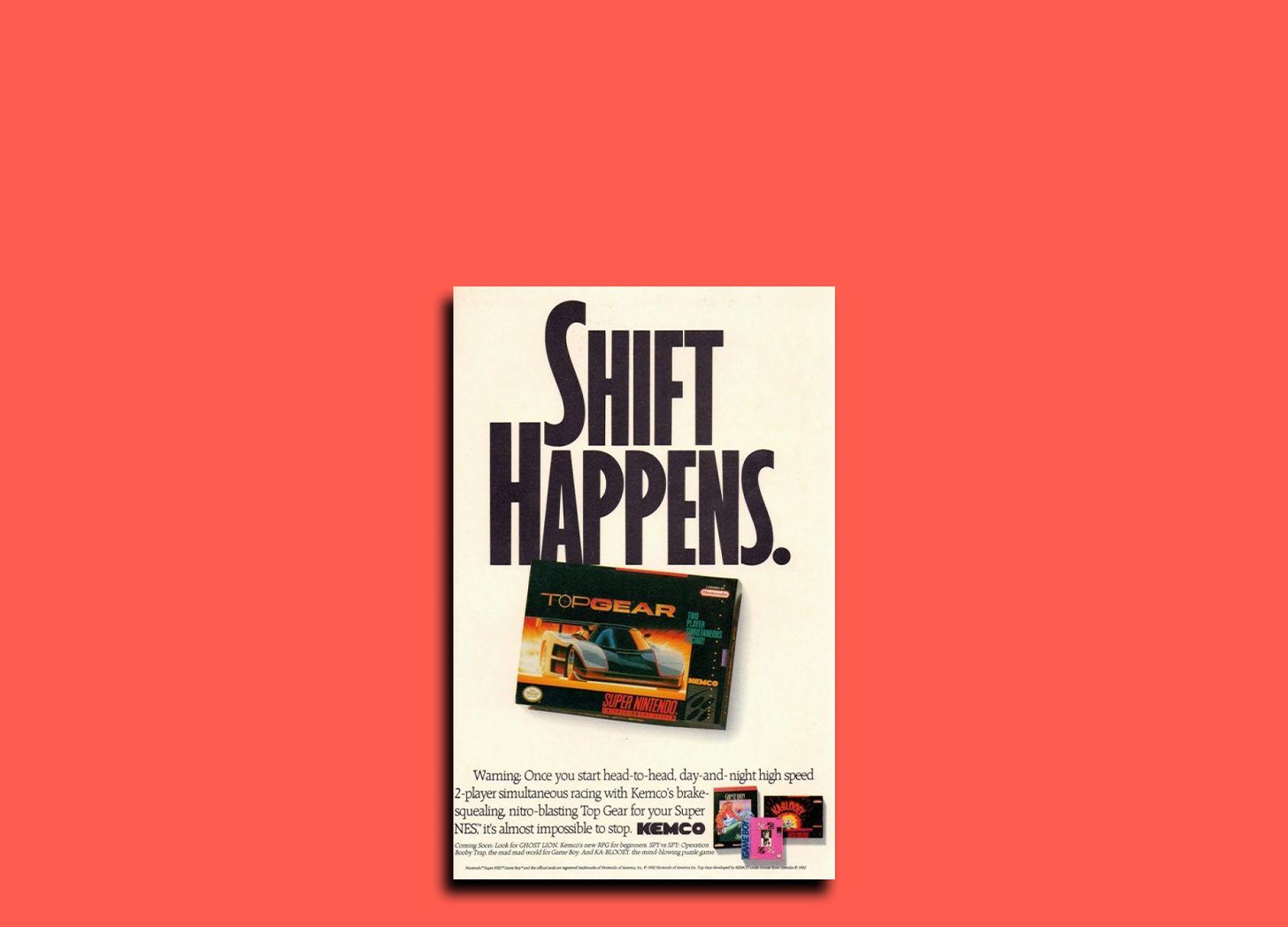
The Waterfall Hijack, a branding book. The Content Machine and The Content Stack, two manuals on short-form content. BARRAGAMES, a newsletter about the gaming industry.
The Waterfall Hijack is a branding book for creatives and founders. The core idea of the book is that the brands that win become the word people use without thinking. Ten chapters teach how to get there.
The waterfall is the idea that arrives at 3 AM. The hijack is claiming the cultural moment before any other brand does.
Every chapter uses the same tool, the Anatomy. An idea has three parts:
I
A truth everyone knows
II
An angle nobody expected
III
An execution simple enough to scale
Find and claim the word
01Own The Word
02When The Waterfall Strikes
03The Reframe Game
04Find Your Cultural Moment
05The Anti-Positioning Statement
Keep the idea alive inside a company
06Guidelines That Don't Kill
07Ship The Rough Diamond
08Protecting the Waterfall
Keep the word after you own it
09Keep The Word
Ship through the fear
10The Choice
“You can present the usual slides, or you can say the thing that gets you fired or famous.”
Two manuals for short-form content.
The Content Machine tells you what to do, step by step. The Content Stack explains why each step works.
The Content Machine
The Complete Framework for Short-form Video
Seven phases in work order: research, script, film, edit, post, analyze, iterate. Each one gives the instruction and the number that tells you whether it worked. From zero to a posting routine in one sitting.
7phases, in work order
1sitting to read it
“You have three seconds. After that, people either love you or send you to irrelevance.”
The Content Stack
A Modular System for Content Creation
Seven modules: hooks, structure, the four content pillars, filming and editing, profile, analytics, the dark playbook. Then the Vault: twenty-plus hook structures with real examples.
7self-contained modules
20+hook structures in the Vault
“People follow you for saying what they're afraid to say.”
1ResearchFind your page hypothesis. Use the 5X rule to spot outliers.Module 1 Three Seconds or Less
2ScriptThey want. But they are worried. So we. Then the hook.Module 2 After the Hook
3FilmPick a format and an angle. Movement, contrast, irony.Module 4 Make It Watchable
4EditServe the message. Subtitles under your mouth.Module 4 Make It Watchable
5PostPick a schedule and hold it. Fix the bio.Module 5 Look at Me, Follow Me
6AnalyzeChoose the goal first. Read the retention graph.Module 6 Read the Data
7IterateGood topic, bad execution: remake it. Double down on winners.Module 6 Read the Data
Modules 3 (the four pillars) and 7 (the dark playbook) have no phase of their own in the Machine.
“Feelings stop the scroll, and they're not always good ones.”
BARRAGAMES
A newsletter about the gaming industry.
BARRAGAMES is where I write about game studios and their brands: what they did, why it worked or failed, and what it means for the industry.
Jason Schreier documented what broke inside Blizzard. This is the brand strategy argument underneath that story.
20 March 20268 likes4 restacks
Bobby Kotick didn’t destroy Blizzard’s brand. The 2021 harassment allegations didn’t either. By the time those stories broke, the account was already empty. What the allegations did was hand players a reason to say out loud what they’d been feeling for years.
Read the whole piece
Blizzard never had a brand. They had something that looked exactly like one, until the conditions changed and the difference became impossible to ignore.
What They Built
Blizzard Entertainment started as a two-person company in 1991 and spent the next fifteen years producing a run of games that shouldn’t have been possible. Warcraft. Diablo. StarCraft. World of Warcraft. Each in a completely different genre, each one arriving and immediately becoming the defining game in its category. By the mid-2000s, World of Warcraft alone had more than eleven million paying monthly subscribers, a population larger than several European countries combined.
I can’t even begin to calculate the amount of hours I played this game.
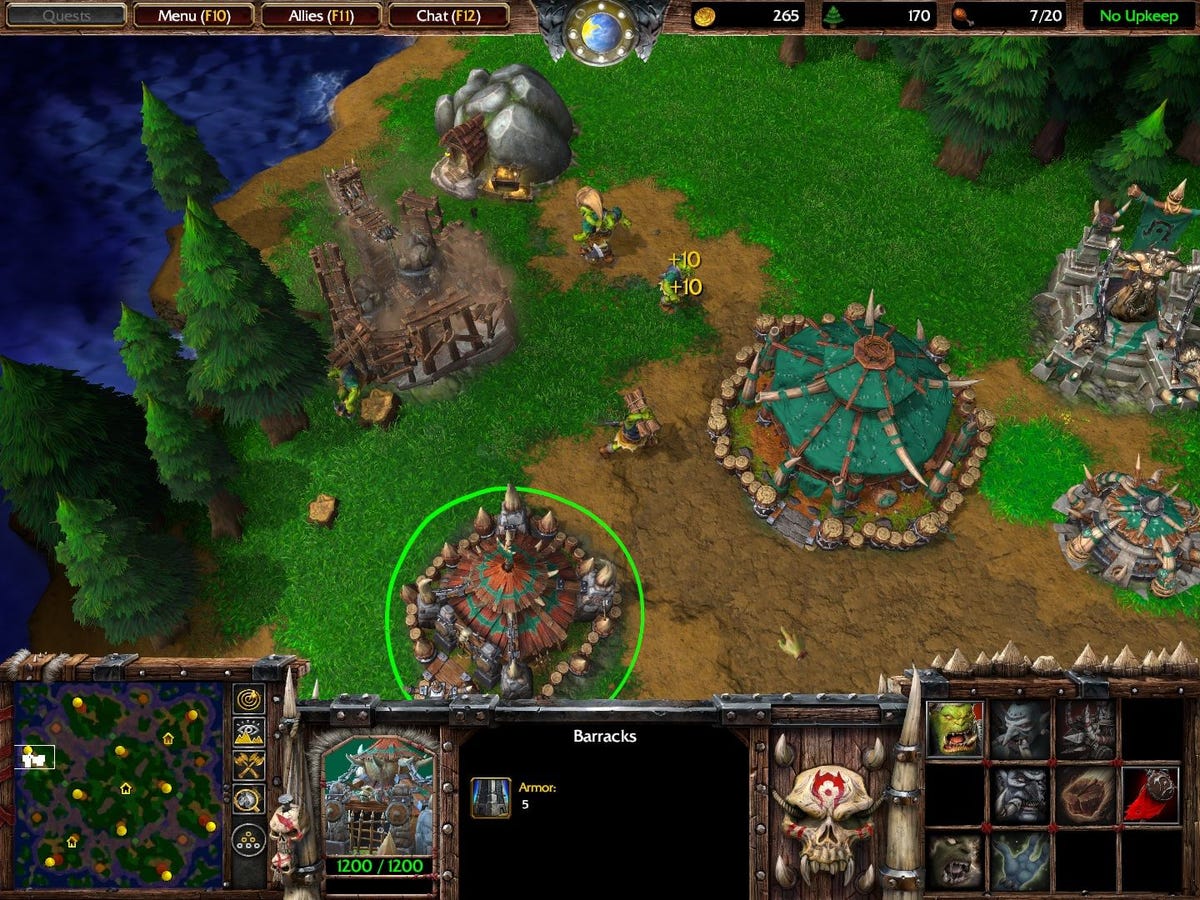
I came in through Warcraft III. My game was Age of Empires II and I had no real interest in other RTS games. Someone convinced me to try it anyway. The story had the best plot twist I’d played to that point, the expansion kept it going, and somewhere in there I was like: Wait I’m playing as the bad guy wha…!?. After experiencing StarCraft (Banger!) and Diablo II (Mega-Banger!) I just I stopped researching Blizzard games before buying them. I heard the name and assumed it was going to be a… Banger. That assumption held for years.
That’s the beautiful thing Blizzard built. Players who went through their IPs stopped evaluating their games the way they evaluated other games. They pre-ordered without footage. They waited years between releases without defecting. The phrase the studio lived by, “it’ll be ready when it’s ready,” became a promise audiences took seriously because the products had earned it repeatedly, across completely different genres, for more than a decade. Players were loyal to Blizzard, full stop, across completely different genres with no connective tissue between them except the name on the box.
That felt like brand loyalty. But surprise surprise! It wasn’t.
Brand equity holds when a product disappoints. It’s the independent layer of trust that survives a bad release or a model shift, because players believe in something beyond any single game. Product line reputation is only as durable as the last thing you shipped. The two look identical when everything you ship is extraordinary. They stop looking identical the moment something changes and you need the trust to hold without a great product underneath it.
Blizzard’s own people had a name for what they were building. Jonathan Bankard, a longtime employee, called it the “player sentiment bank account,” the idea that every decision the studio made either deposited trust or withdrew it. Even the finance team operated by this logic. When Blizzard’s accountants discussed how much to take from Diablo III’s auction house in 2011, they argued for lowering their own margin because the system existed for players, not for Blizzard’s revenue line. “I think Blizzard’s forte,” Bankard said, “was really leaving a bunch of money on the table.” Can you imagine finance people arguing to make less money? If this is not love for games I don’t know what is.
The Merger
In 2008, Blizzard became a subsidiary of Activision Blizzard, formed when Activision merged with Vivendi’s gaming division. Bobby Kotick, Activision’s CEO, took the top role. Mike Morhaime, Blizzard’s cofounder, remained president of Blizzard Entertainment and was promised the autonomy to run it as he always had.
Kotick ran a different kind of operation. Activision built its success on treating games as franchises to be optimized and sequelized on predictable schedules, and Kotick surrounded himself with executives from consumer packaged goods, people who had run finance at Procter & Gamble and knew how to move chocolate and laundry detergent. “If it did not have an opportunity to be a billion-dollar-plus franchise, don’t consider it,” one Activision executive summarized.
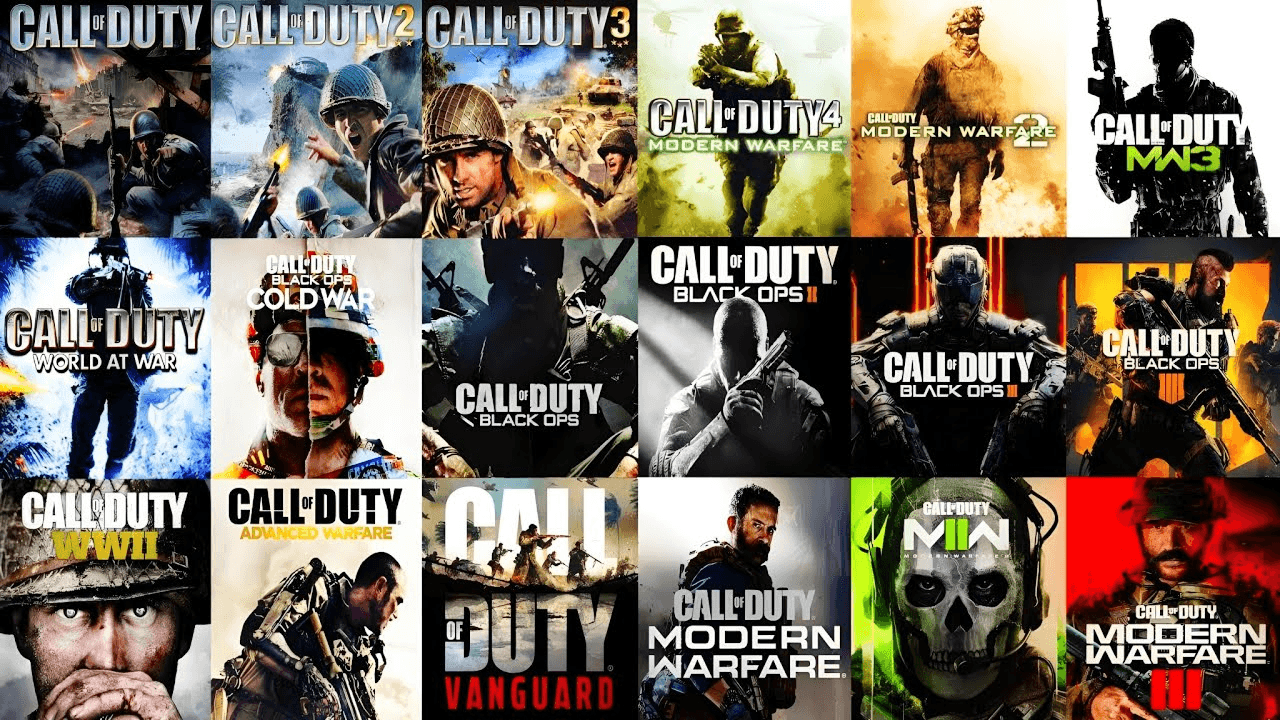
MW3 and Black Ops 3 were my games back in the Xbox 360 days. Countless late night with friends fucking around on Team Deathmatch or Kill Confirmed.
For the first few years, the merger held to its terms. World of Warcraft generated enough revenue that nobody at Activision had much reason to interfere. The industry was shifting, though. Hearthstone, Blizzard’s free-to-play digital card game, launched in 2014 and became a massive hit. Overwatch launched in 2016 as a premium title but operated as a live service, updated continuously with cosmetics sold separately. The classic model, make something great and sell it once, was giving way to something that required ongoing revenue from players already inside the game.
Blizzard had never needed to answer the question that model raised. Their philosophy, make great games and the money will follow, had worked when the transaction was simple and finite. In free-to-play, the transaction never ends. Revenue has to be actively managed inside a continuous relationship with players who notice every decision about what to charge and how. Blizzard was working this out in good faith. Heroes of the Storm refused to use virtual currency in its store, a deliberate choice to show real prices rather than obscure costs behind gems or casino chips, as every competitor did. To the people who built it, that was the player-first approach applied to a new model.
To Activision, it was leaving money on the table.
The Hire (and for me, the beginning of the end)
In 2015, Blizzard needed a CFO. Jason Schreier’s reporting in Play Nice details what they were looking for: someone with enough financial credentials to satisfy Activision’s C-suite and enough gaming sensibility to fit a culture that had always put players first. They had been searching for over a year.
Armin Zerza came recommended through Activision. His background was twenty years at Procter & Gamble, running finance for detergent and diaper divisions across Europe and Latin America. Sharp operator. No meaningful connection to games, or to what made Blizzard’s relationship with players different from what P&G had with shampoo buyers.
Guys! Its this one right here!
Blizzard’s top executives and game team leaders interviewed him and convened the following week with a unanimous verdict: no. Zerza had shown no interest in Blizzard’s player-first culture and kept returning to one subject: how to make as much money as possible.
Morhaime overruled them and hired him anyway, hoping proximity to Blizzard would teach Zerza what made the studio worth protecting. But surprise surprise again! It didn’t.
Zerza built out a finance department by bringing in staff with Ivy League MBAs and consulting backgrounds, people who had never worked in a business where the customer’s trust was the primary asset. He embedded them inside game teams as commercial leads, responsible for each franchise’s monetization strategy. Finance people who had previously been peripheral were now in strategy meetings, asking why Hearthstone wasn’t pushing players to buy card packs more aggressively and why Overwatch wasn’t charging real money for maps and heroes.
Ryan Ward, a product director, described Zerza’s approach in one sentence: “He would never speak on behalf of the franchise or the player. It was all about revenue, engagement, KPIs, performance.”
Blizzard’s culture had always put the player first and trusted that commercial results would follow. Zerza ran the logic in reverse. And the free-to-play transition, which needed a more sophisticated version of the player-first approach rather than an abandonment of it, got handed to people who had no framework for what player trust was worth or how fast it spent down.
P&G doesn’t lose brand equity when it raises the price of shampoo. Blizzard loses everything when it charges wrong for a hero skin. Those are different businesses operating on different logic, and nobody in Blizzard’s new finance team had worked in the latter.
The Withdrawals
Heroes of the Storm reversed its transparent pricing under commercial pressure and added loot boxes and virtual currency, the exact obfuscation the team had refused on principle. One designer described what changed: “It became less about ‘How can we do this in the coolest way?’ and more about ‘How can we make more money than X or Y?’” A different question produces different products. The games started showing it.
Zerza suggested shutting down BlizzCon because it cost tens of millions of dollars and didn’t generate profit. Blizzard’s managers explained that the convention was a community investment, tens of thousands of players flying to Anaheim every year because they believed in what Blizzard was building. The player sentiment account made physical. Zerza suggested they kill it anyway.
By 2017, Zerza had been promoted to Chief Operating Officer. Morhaime, who had written to Kotick that preserving Blizzard’s culture was a commercial necessity, that the culture was what allowed Blizzard to attract the talent that made the games worth buying, submitted a resignation letter that year, walked it back, then left for good in 2018. Blizzard employees had started noticing the same pattern: a Blizzard person would leave, and an Activision person would take the seat.
The Last Deposit
Overwatch launched in May 2016 and it worked completely. Characters with enough personality that players built entire communities around them before Blizzard had properly told their stories. Jeff Kaplan, the game’s director, had promised publicly that heroes would never be sold and the player base would never be split by paywalls. Players believed him because the account was still full.
That game was the last meaningful deposit Blizzard made.
At BlizzCon 2018, Diablo Immortal was announced for mobile at a convention full of PC players who had been waiting years for Diablo IV. When a fan asked during a panel if the game would come to PC, the response was “do you guys not have phones?” The clip spread immediately. It captured a company that had stopped reading the room it had spent thirty years building.
Overwatch 2 cut deeper, because the broken promise was specific and documented. Heroes were sold. The game that launched in 2022 was not six years of work; the competitive multiplayer was roughly one year of development. The ambitious story mode that justified calling it a sequel never came together and was abandoned. Players paid for a sequel and received a repackaged version of what they already owned, the terms of ownership quietly changed. One person who worked on it said: “People said it looked unfinished. That’s because it was.”
The Allegations Confirmed More Than We Could See
Also the book mentions that a some developers were open swingers and would kind of invite their co-workers to sex parties… wow dude!
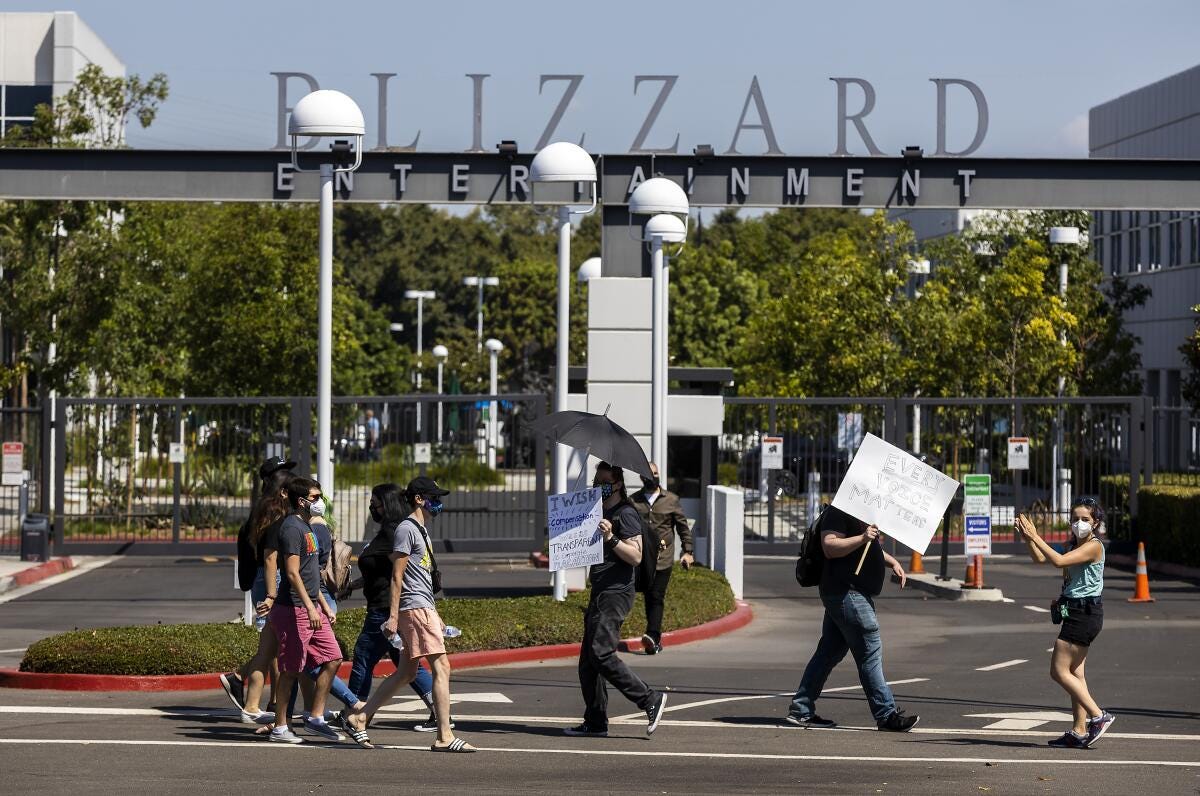
When California sued Activision Blizzard in 2021, detailing years of sexual harassment and a leadership culture that had looked the other way, players recognized it immediately.
The important thing to understand is that the frat house culture Schreier documents wasn’t a product of Activision’s interference or Zerza’s appointment. Schreier traces it to the mid-nineties, to strip club runs after shipping milestones, to harassment in the QA pit during Diablo II, to a company anniversary video from 2001 that described the office as “thankfully more like a frat house than a business.” That culture had been there from the beginning, protected by the extraordinary quality of the games above it. When the games were good enough, nothing underneath them was visible.
By 2021 the games had stopped being good enough, and players had already been paying attention to everything Blizzard did for three years. The trust was gone. The benefit of the doubt was gone. And into that vacuum came a lawsuit that showed them what had been running underneath the whole time.
Two separate failures landed at once. One was financial extraction that had spent down the player sentiment account over six years. The other was institutional misconduct that had been present for twenty. Players experienced both as a single collapse because by the time the lawsuit broke, they were already looking for reasons to confirm what they’d suspected. The allegations gave them more than they were looking for.
The Empty Account
NetEase (The Chinese company that helped make Diablo Immortal) publicly destroyed Blizzard statue in China after their breakup lol.
Morhaime had hoped Zerza would learn Blizzard’s values by being inside the building. Schreier’s reporting shows it went the other direction. The people who built the player sentiment account had operated on instinct for so long that when the arguments came, they couldn’t translate that instinct into terms that survived a boardroom. Zerza had spreadsheets and quarterly targets. The culture had a philosophy built for a world where the product always justified itself. In free-to-play, it no longer did that automatically, and nobody on the player-first side of the argument knew how to say what the account was worth in the terms that now governed the room.
Free-to-play made the player-first approach more commercially necessary, because in a live-service relationship every extraction decision is visible and the player can always leave. What Blizzard needed in 2015 was someone who understood the player sentiment account well enough to figure out how to make deposits in a new model. What it got was someone who didn’t know the account existed.
What brand equity would have looked like for Blizzard is worth naming, because it's the thing the piece keeps circling without saying directly. A studio with genuine brand equity has an identity that exists independently of any single product, something players believe in that survives a bad release, a model shift, or a leadership change. Blizzard had the raw material for it: a philosophy, a specific relationship with players, a set of values precise enough that their own employees could use them to win internal arguments. What they never did was manage that as a strategic asset, name it publicly, build it into how they communicated, make it visible enough that players could hold onto it when the products started disappointing. The player sentiment account existed. It was just invisible, which meant the only people who could defend it were the people who had built it on instinct, and when those people left or were overruled, there was nothing structural left to hold.
The balance had been gone for years before the allegations broke. Players had already felt the loss.
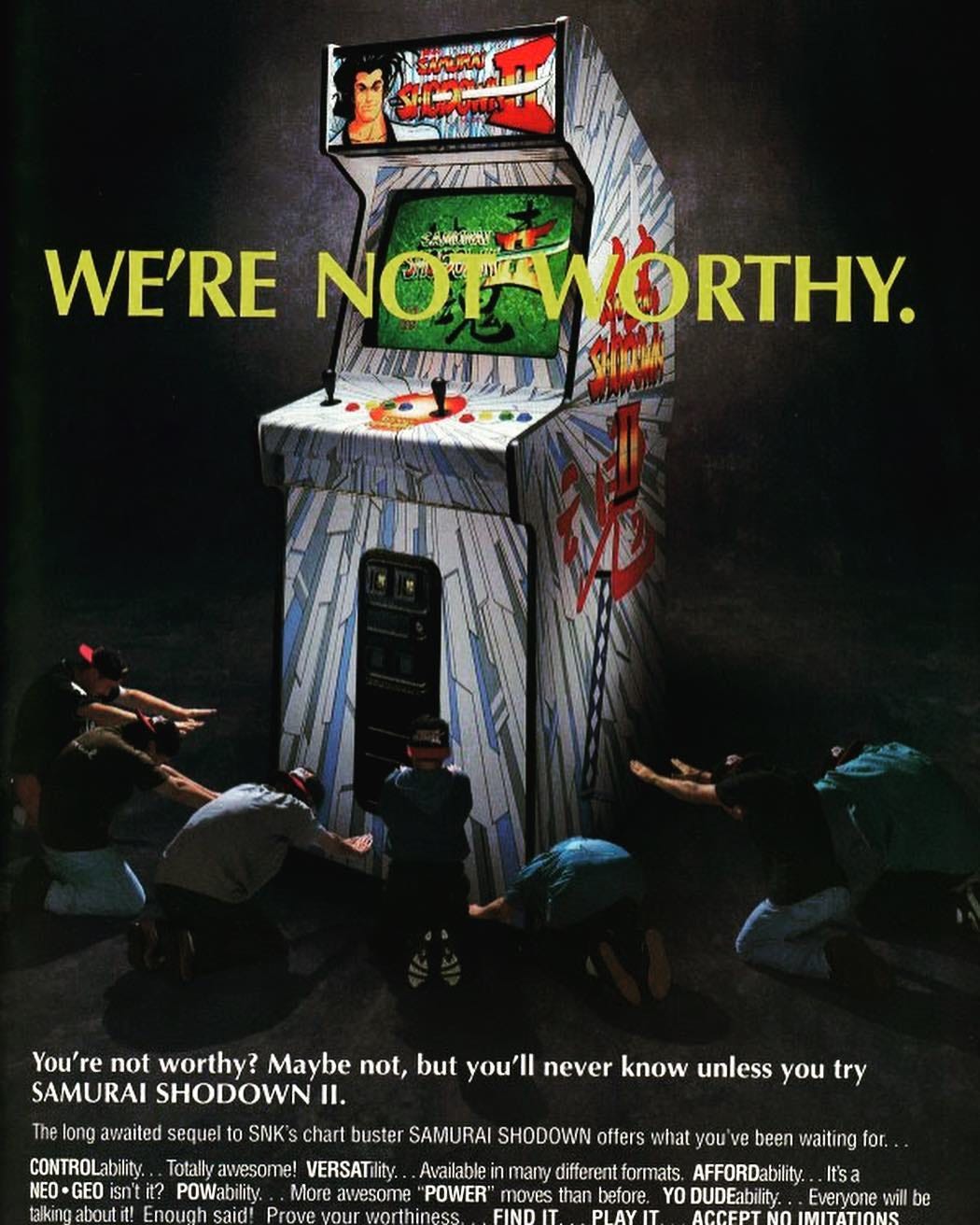
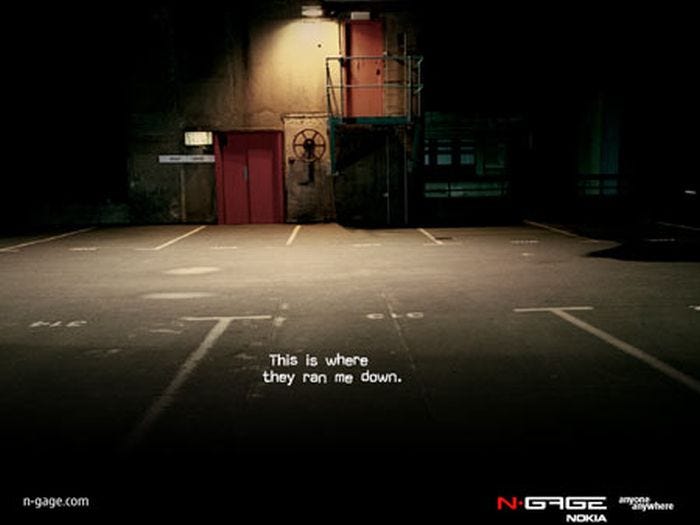
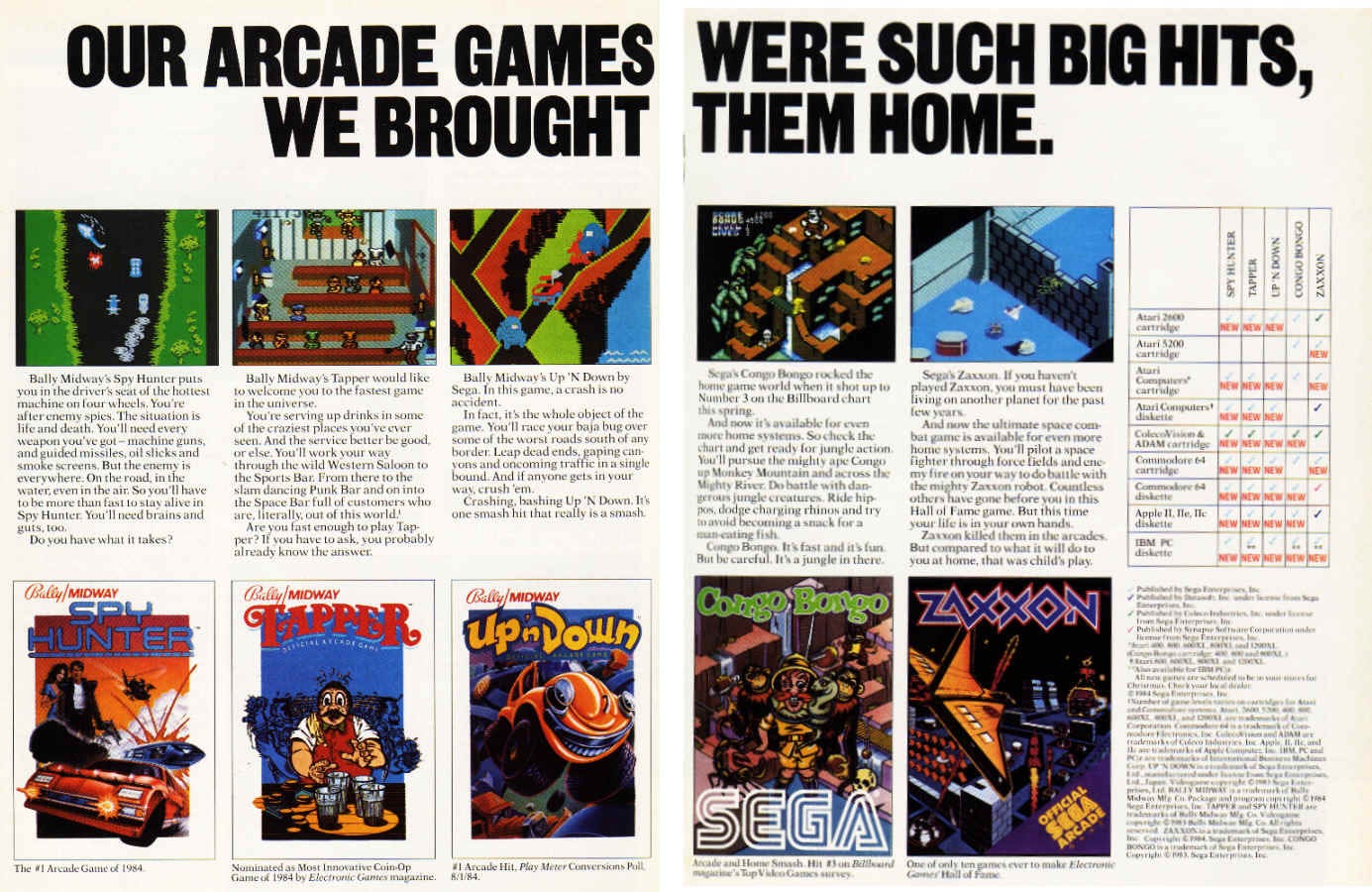
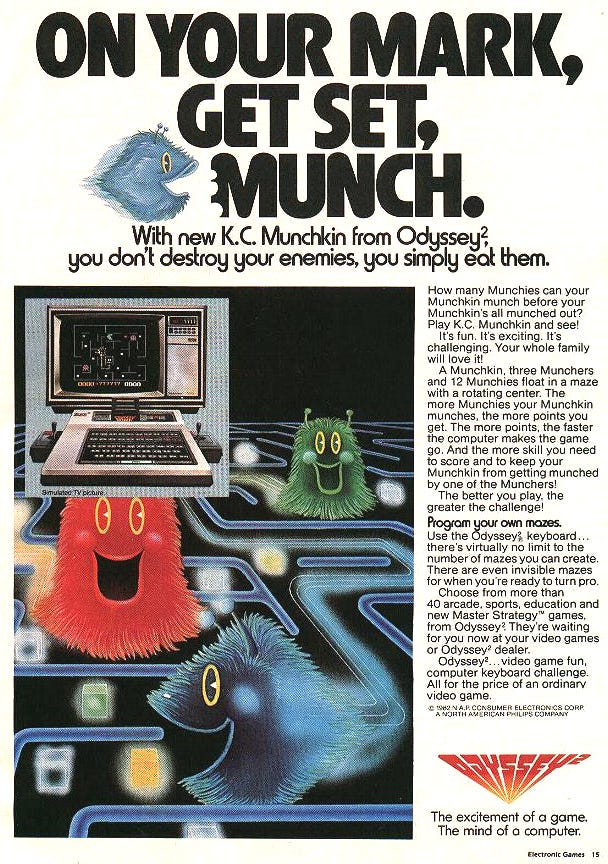
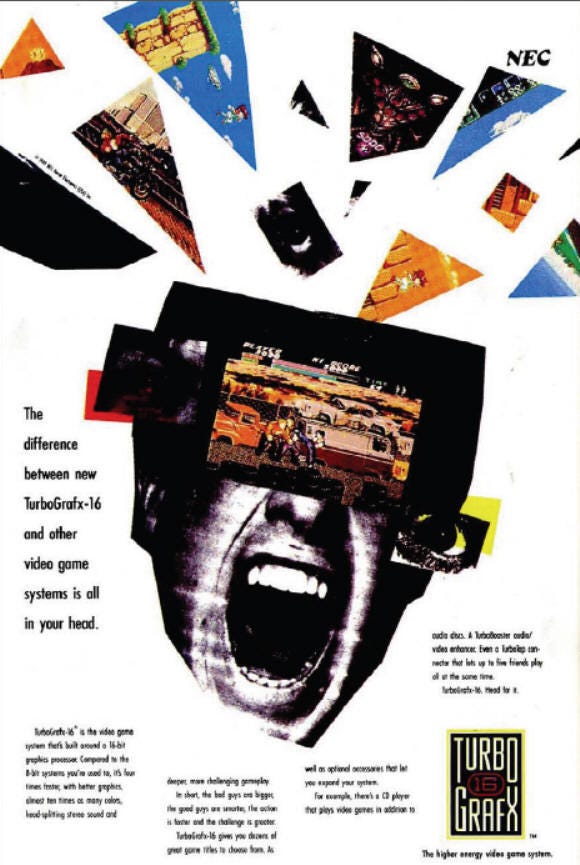
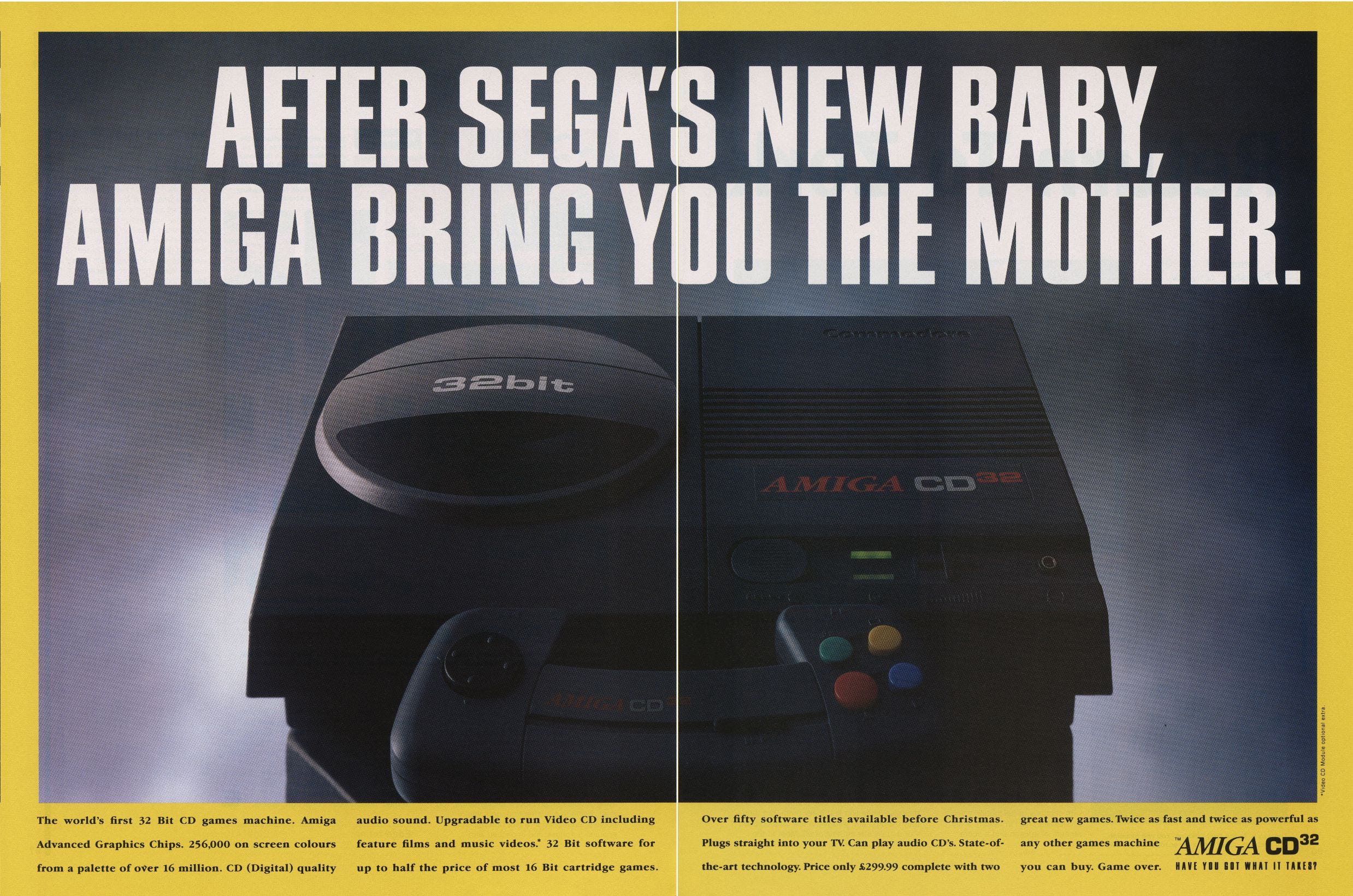
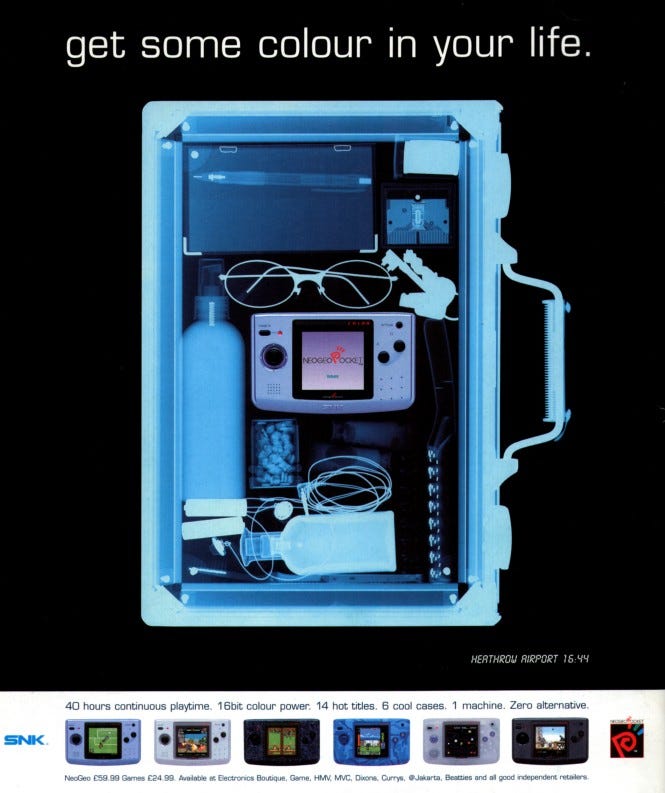
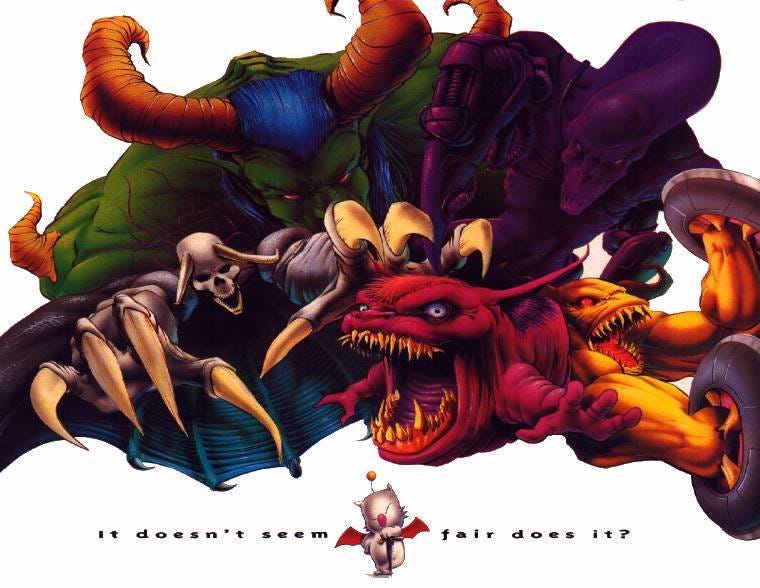
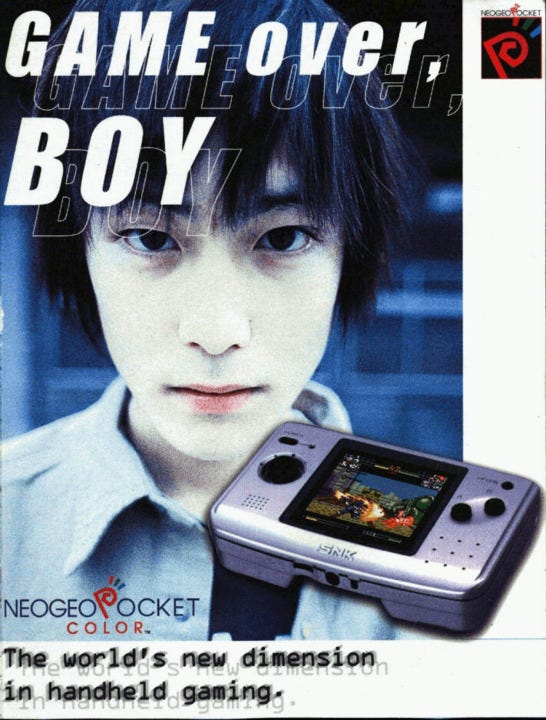
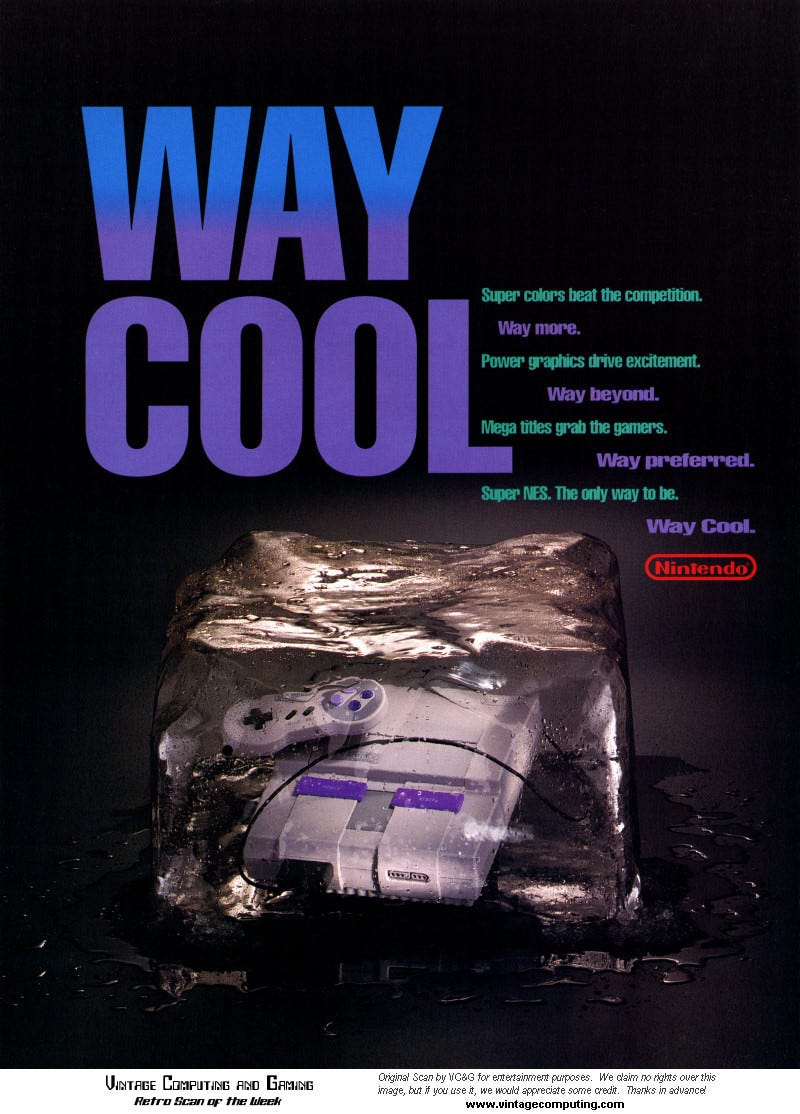
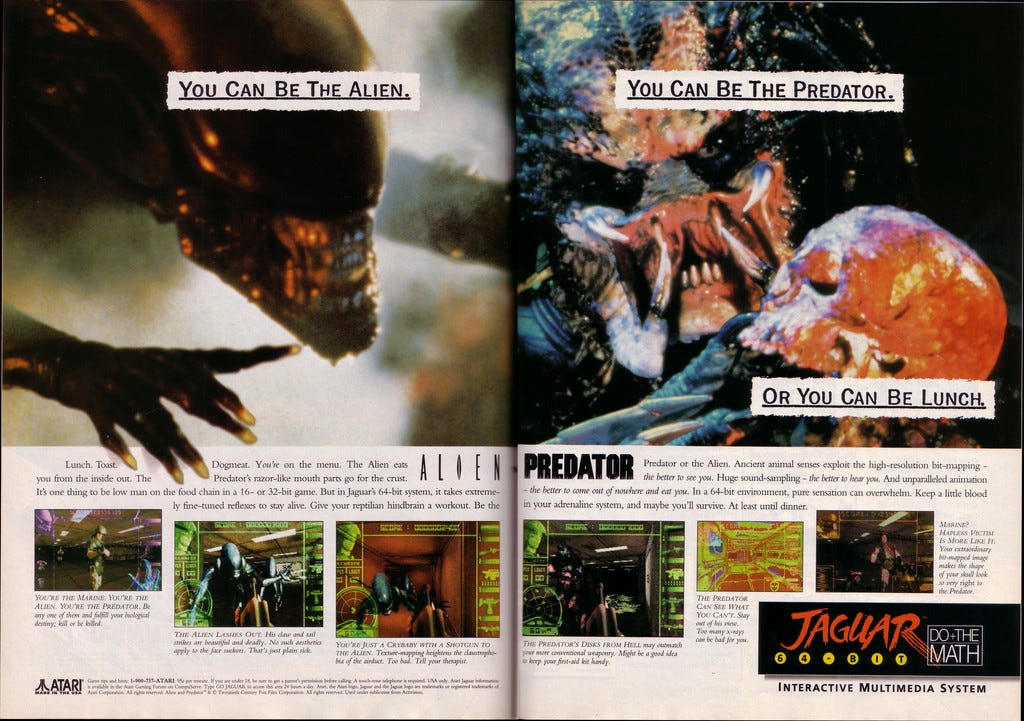
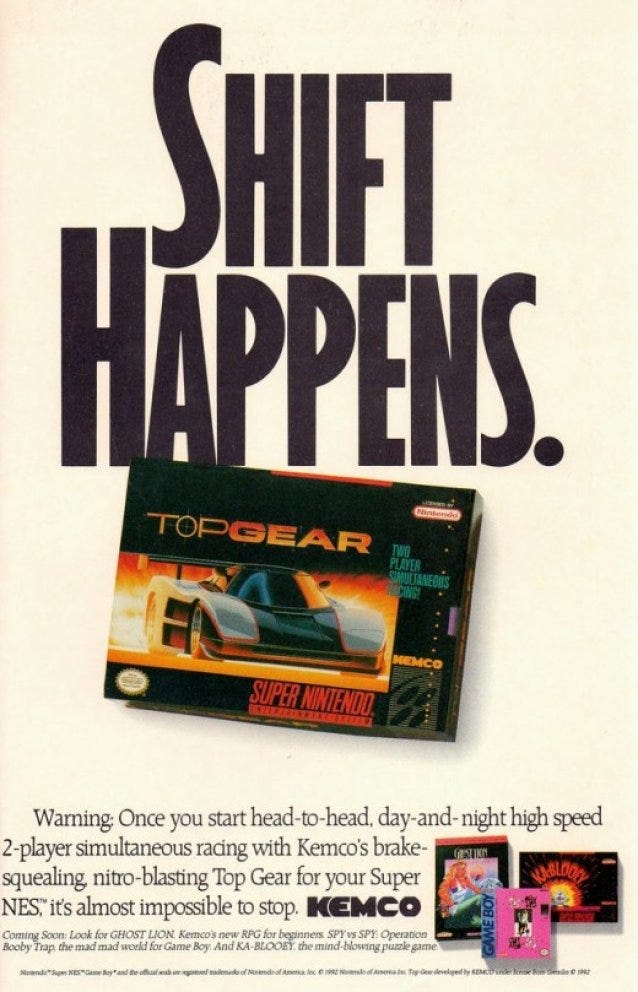
The Best Brand Writing in Gaming History Ran in Print Magazines
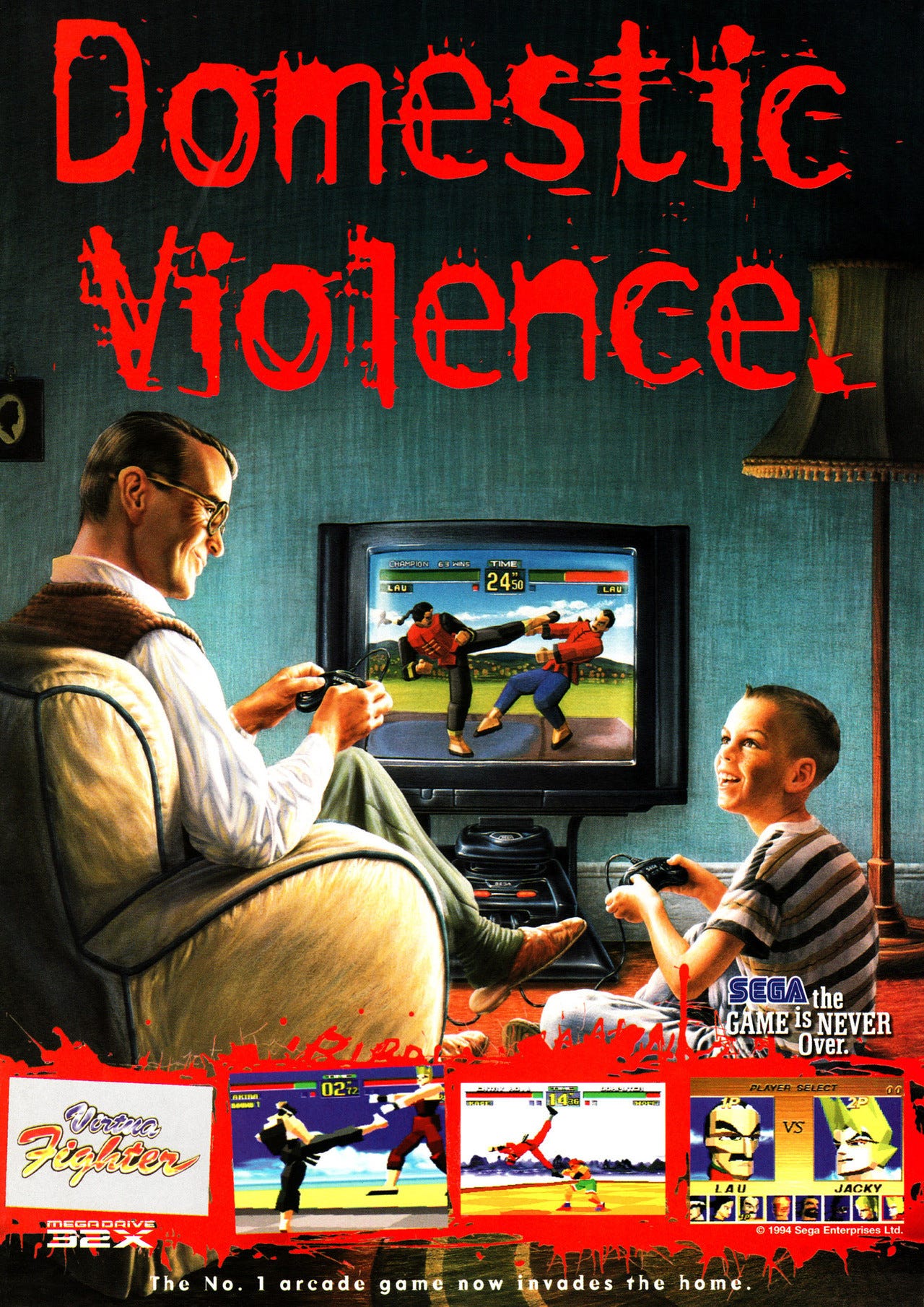
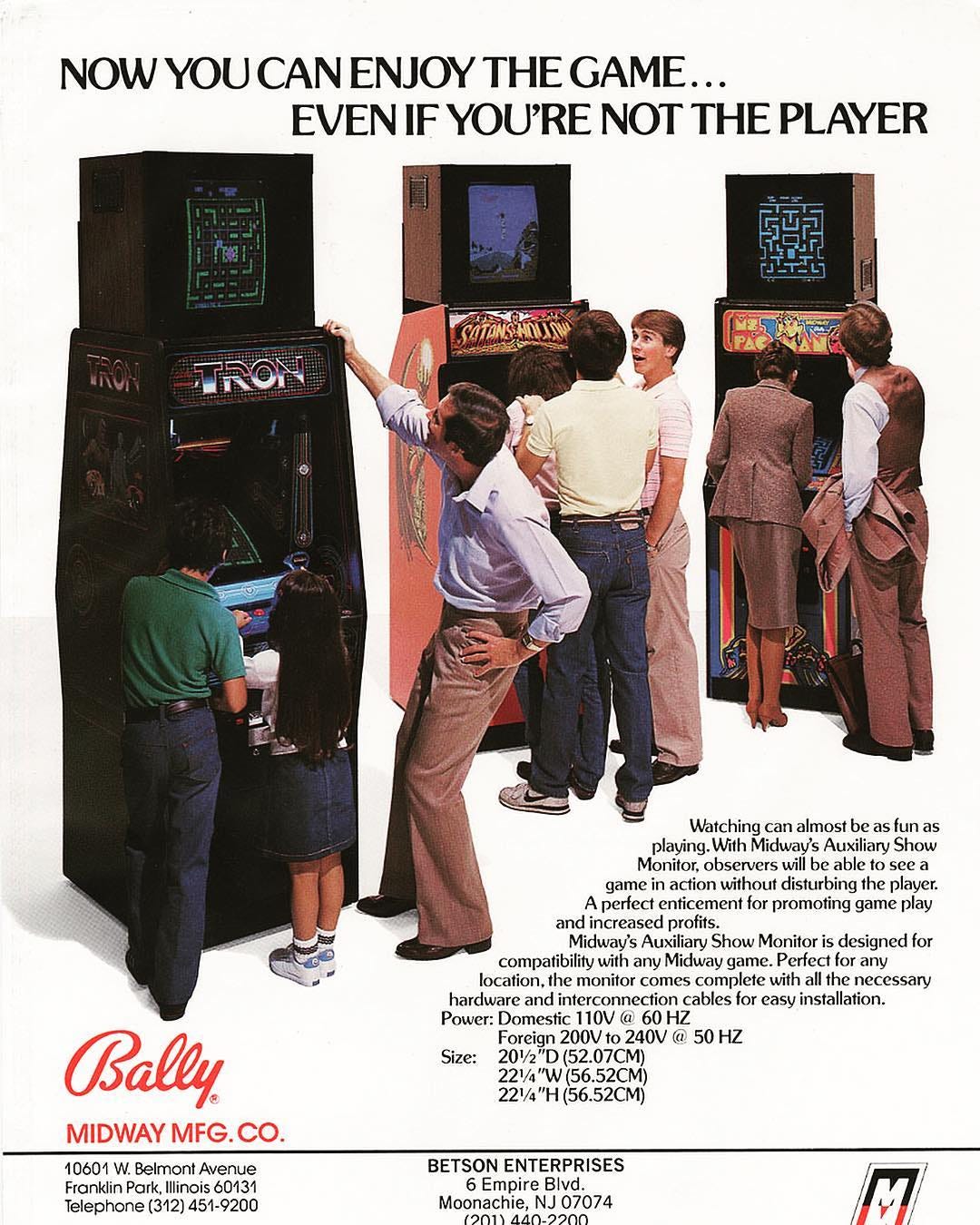
Before video trailers, studios had print ads to make you feel the game. Some of them are still the best the industry has ever seen.
26 February 202612 likes9 restacks
When I was in university, my creative copywriting professor walked into class with a stack of movie posters and no presentation. His argument was:
If you want to understand what great copy looks like, study movie posters. More specifically, movie taglines.
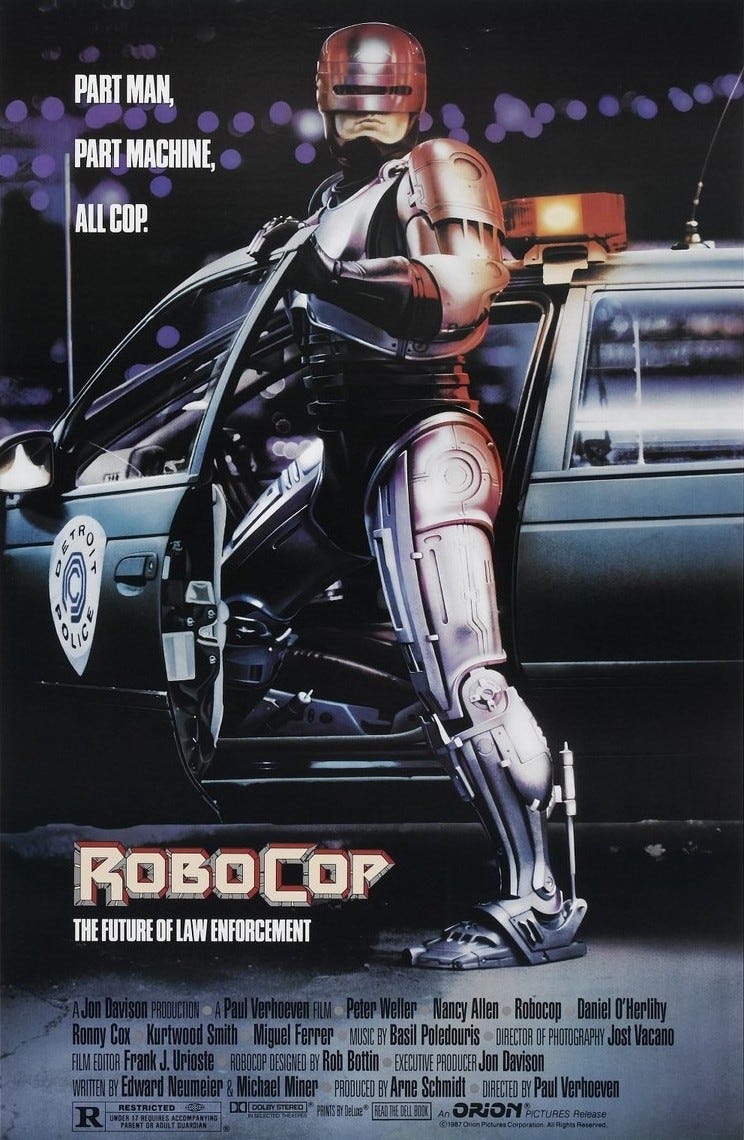
The first one he held up was a RoboCop poster: “Part man, part machine, all cop.” A copy that set the genre and the emotional premise without describing a scene. You almost don’t need to see the film, the line does everything. I was fascinated!
Read the whole piece
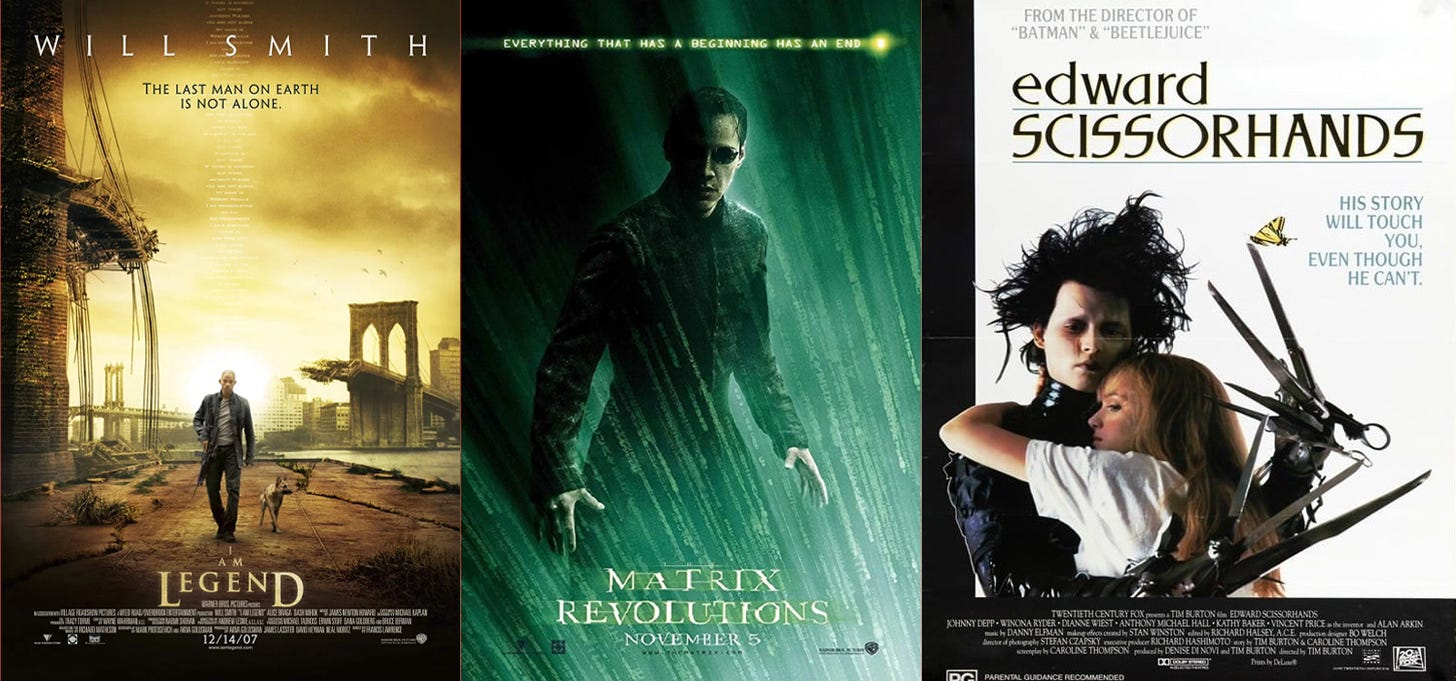
“The last man on earth is not alone” SO GOOD MAN!!!!!!
I’ve been thinking about that class ever since and it’s been more than 10 years. What my professor couldn’t have known, because he was not a degenerate gamer like me, was that the same thing was happening in gaming magazines, and that some some of those lines belong in the advertising hall of… game. (get it? Alright I’ll stop.)
This is about those lines, what they were doing strategically, and why the industry stopped producing them.
I want to look at three moves in brand strategy, and show how game ads from that era were doing them.
World-building: The ability to make someone feel a place, a tone, an identity before they understand what they're buying.
Anti-positioning: The move I wrote about in The Waterfall Hijack, where instead of explaining what you are, you expose what everyone else is and let the contrast do the selling.
Wrong Category Hack: Stealing the language and authority of an unrelated category to make a claim.
The game ads that got this right belong in the same conversation as the Nike or Apple ads produced in that era.
World-Building
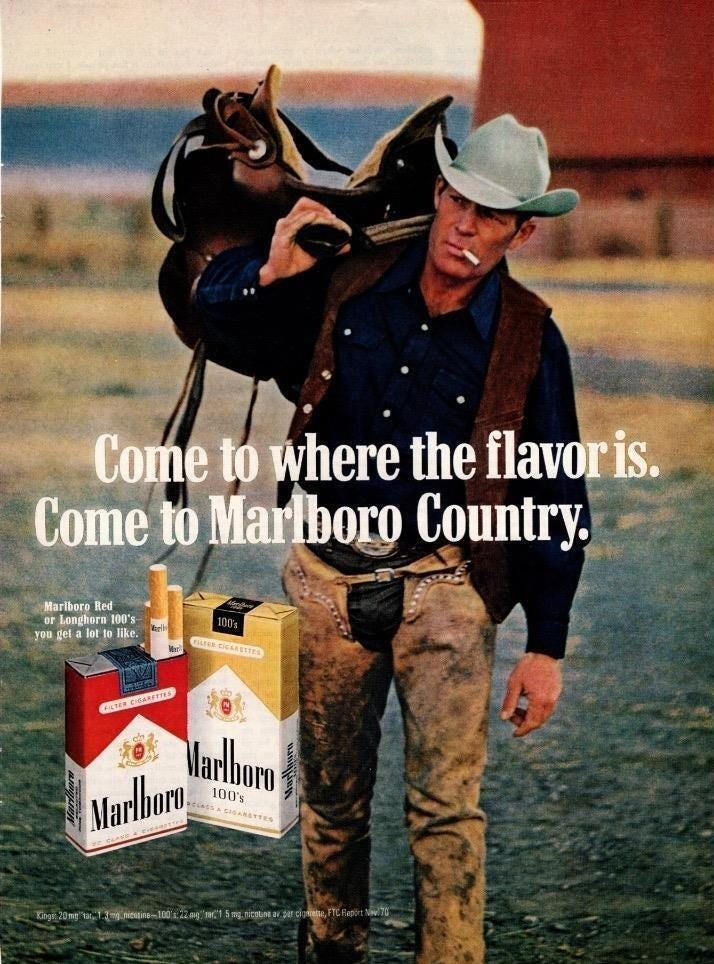
At least five of the men who portrayed the Marlboro Man died of smoking-related illnesses, the irony.
Marlboro’s “Come to Marlboro Country” campaign is a magnificent example of world building: The photograph of a cowboy doing cowboy stuff made the campaign visible, but the copy gave it mythology status. Without that line, you have an image. With it, you have somewhere to go. It describes a feeling of place you can belong.
Now let’s see this concept applied to the gaming industry with Zelda and some good-old horror games. Yaaaay!!!
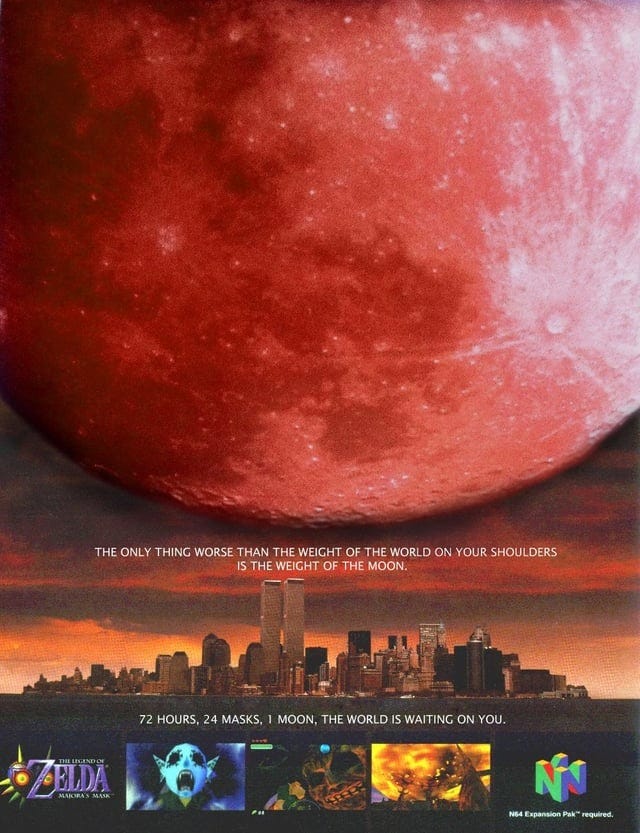
Look at the Majora’s Mask ad and what it actually asks you to carry. “The only thing worse than the weight of the world on your shoulders is the weight of the moon.” Below that: “72 hours. 24 masks. 1 moon. The world is waiting on you.” The entire sentence structure of this ad puts time pressure on us and we haven’t even touched the game yet. If Marlboro is a place to escape to, Majora’s Mask is a place you couldn’t escape from. Both named the feeling and trusted the reader to fill the rest. God I love this so much!
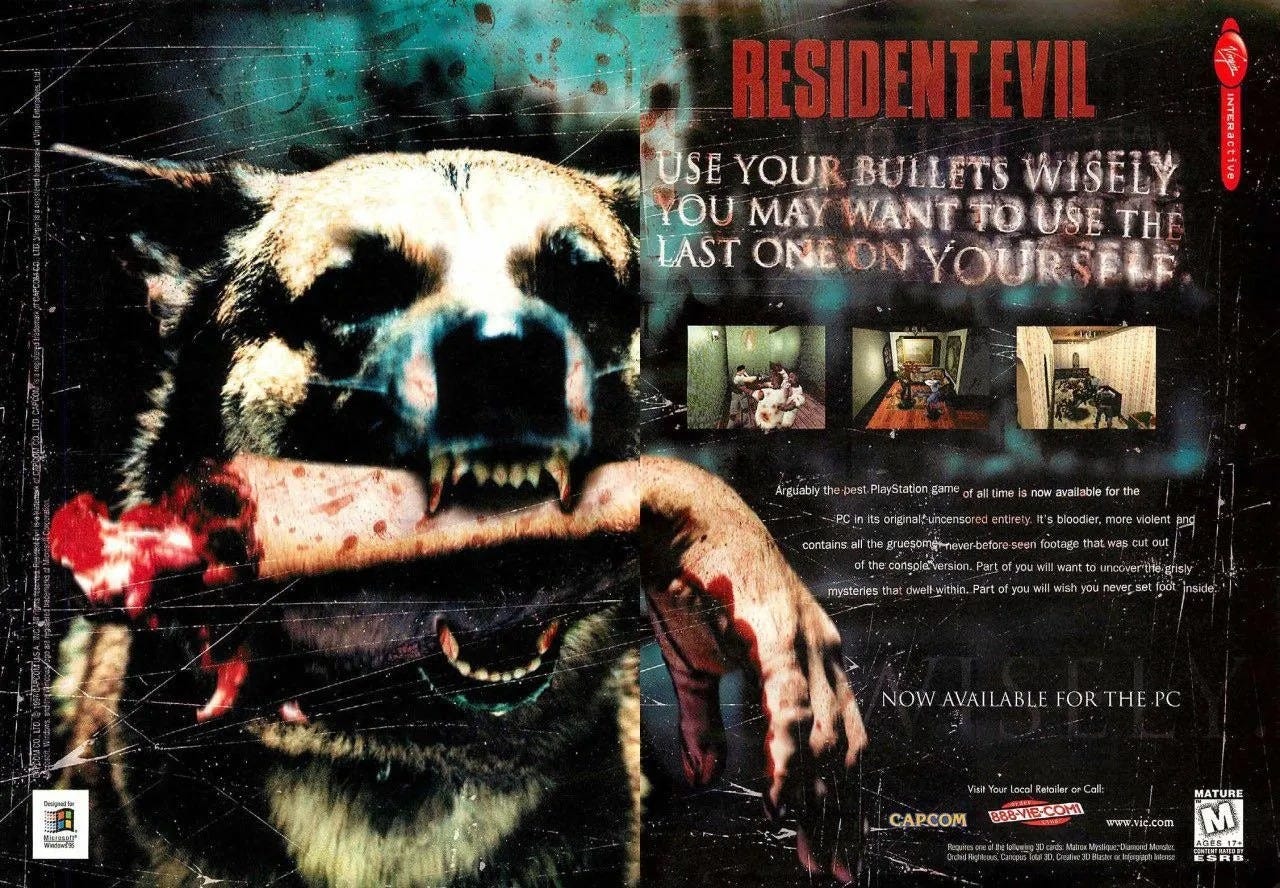
Where Majora’s Mask built a world through atmosphere, Resident Evil built it through consequence, dropping you into a survival problem: “Use your bullets wisely. You may want to use the last one on yourself.” You don’t need to know what’s in the mansion. The copy tells you how bad it is and sets the tone before the purchase.
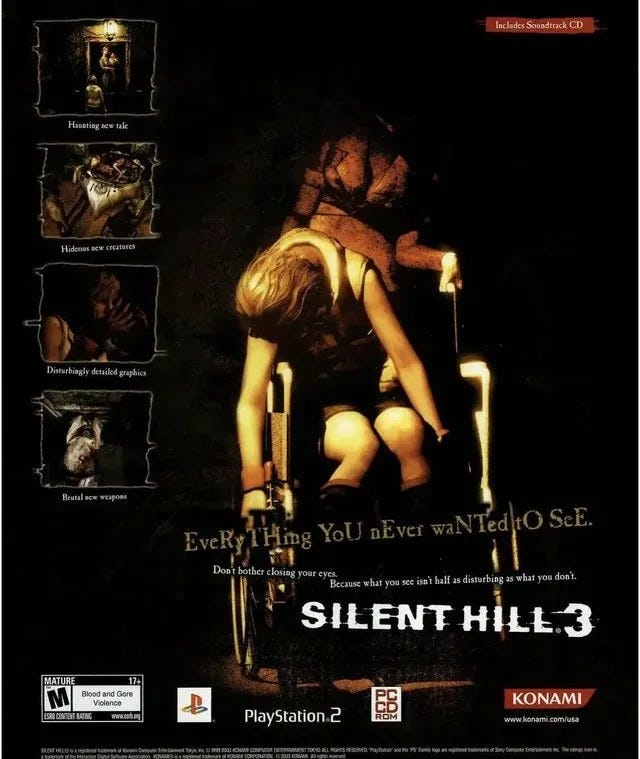
“Everything you never wanted to see.”
The correct headline we all know is "everything you ever wanted", that one-word swap turns aspiration into dread. It borrows a familiar promise and inverts it, now the copy sells horror through the structure of something that sells excitement.
Anti-Positioning
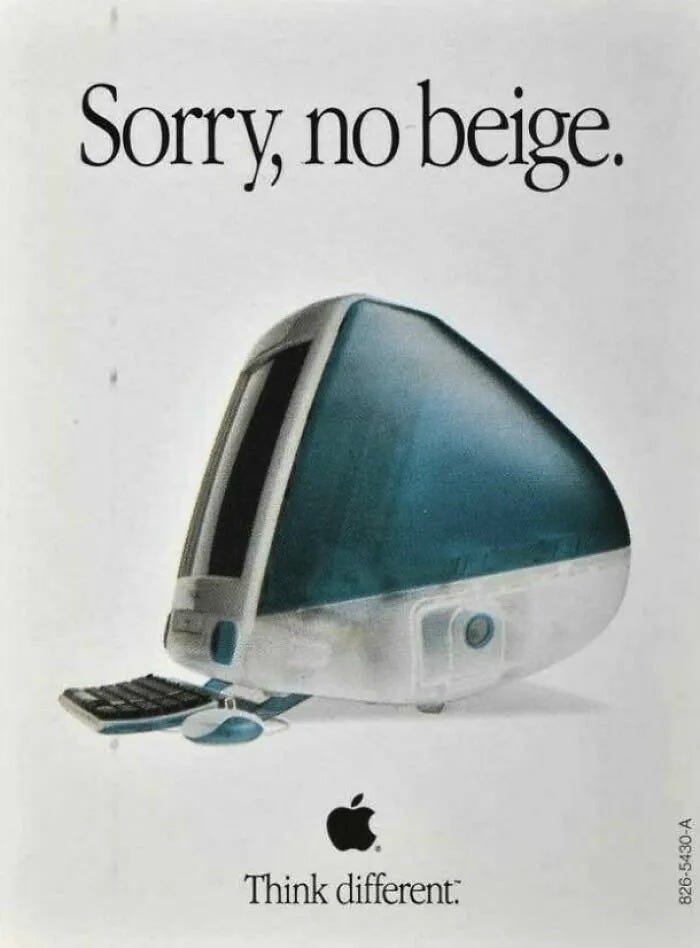
Apple launched the iMac in 1998, one of the ads read: “Sorry, no beige.”
Back then every computer on the market was the same color, and the apology in that headline framed an entire product category as an inconvenience (they made it uncool). They named what they were killing, and the photo did the rest without talking about competitors.
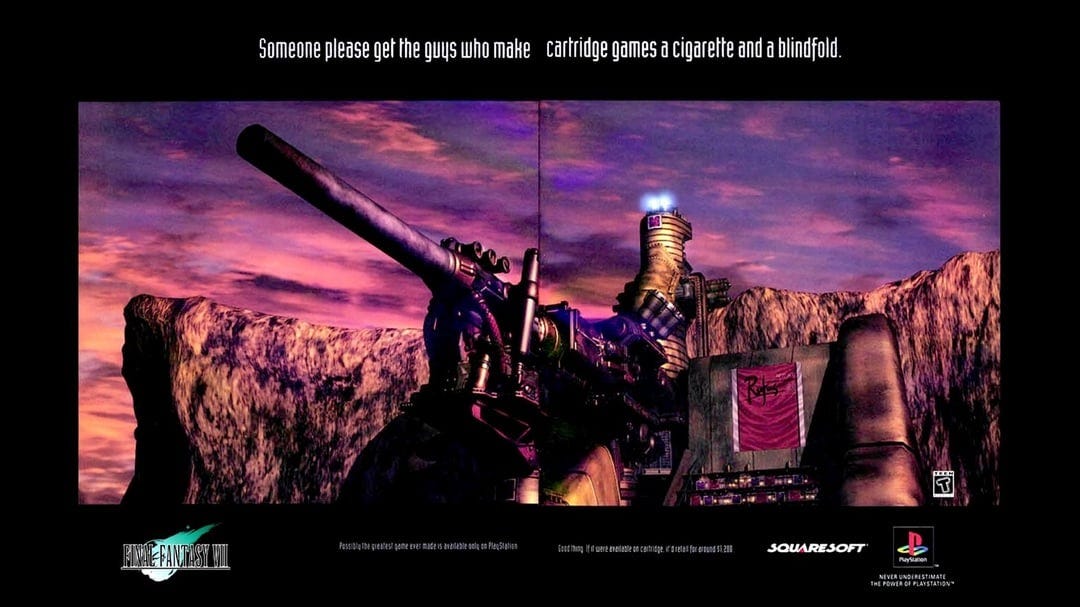
The Final Fantasy VII print ad from 1997 opened with: "Someone please get the guys who make cartridge games a cigarette and a blindfold." The firing squad metaphor treated the cartridge era as a condemned man, and the copy at the bottom explained why: "Possibly the greatest game ever made is available only on PlayStation. Good thing. If it were available on cartridge, it'd retail for around $1,200."
Nintendo didn’t even need to be mentioned because they owned the cartridge format at the time. The ad made the format the problem, and made competitors that ship cartridges look outdated and expensive.
The Wrong Category Hack
The move is simple: steal the language of a category that has nothing to do with yours, and let its authority make the claim your own register can’t.
Boddingtons ran a print ad in the early nineties with no copy except the tagline. It steals from ice cream advertising. When you see a soft serve, you think cold, sweet, something you want on a hot day… like a beer.
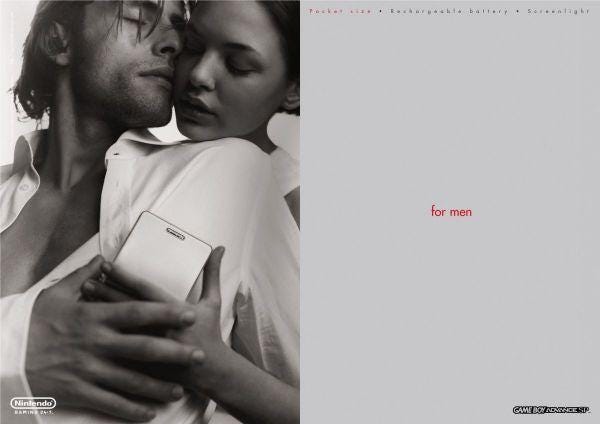
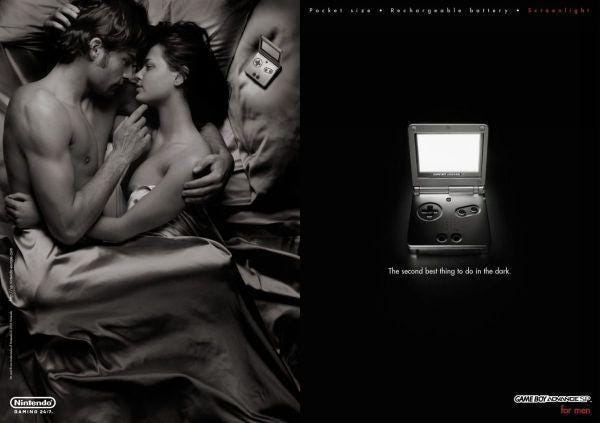
The Game Boy Advance SP campaign from 2003 ran in magazines looking exactly like a condom ad. The visual grammar is executed so well that the product reveal requires a second look. And of course, the amazing copy that goes with the piece.
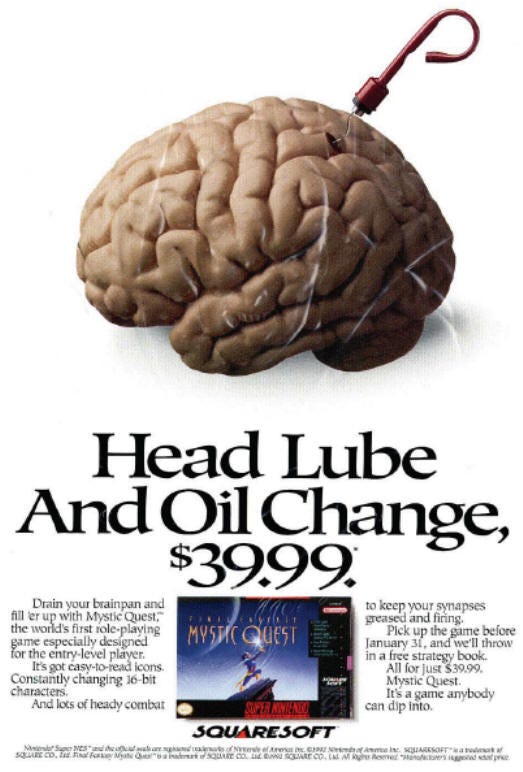
Final Fantasy Mystic Quest stole from automotive service by saying that this game will service your brain the way a mechanic services an engine, and the price is what that service is worth.
Enter The Video Era
Game trailers made good copywriting in print ads optional, and when something is optional it slowly disappears.
When a trailer can show you everything with no room for interpretation, the pressure to say the thing in a sentence disappears. The question of what a game feels like gets answered by a gameplay showcase.
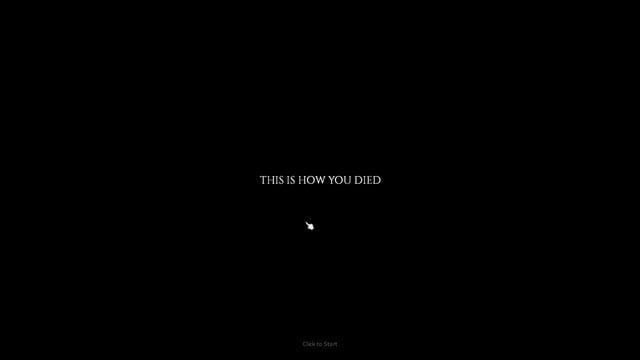
But there are some modern examples of great copy in games, maybe not in print anymore but in the game itself. Like “This is how you died” from Project Zomboid, again, it tells you the tone and emotional premise before you start playing.
The medium died. The art didn't.
Personal Selection
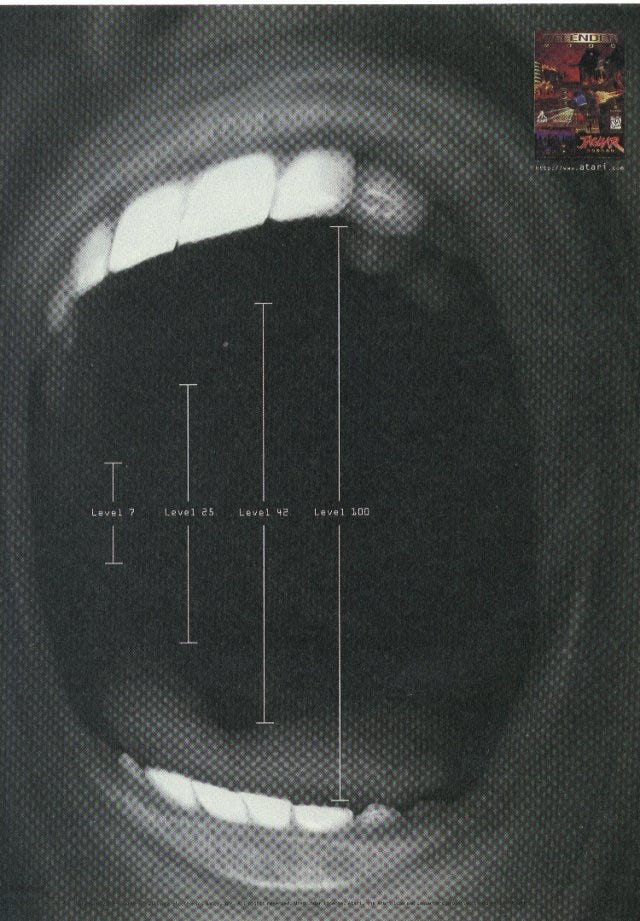
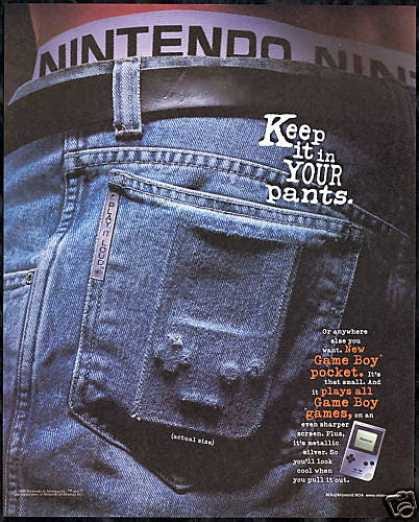
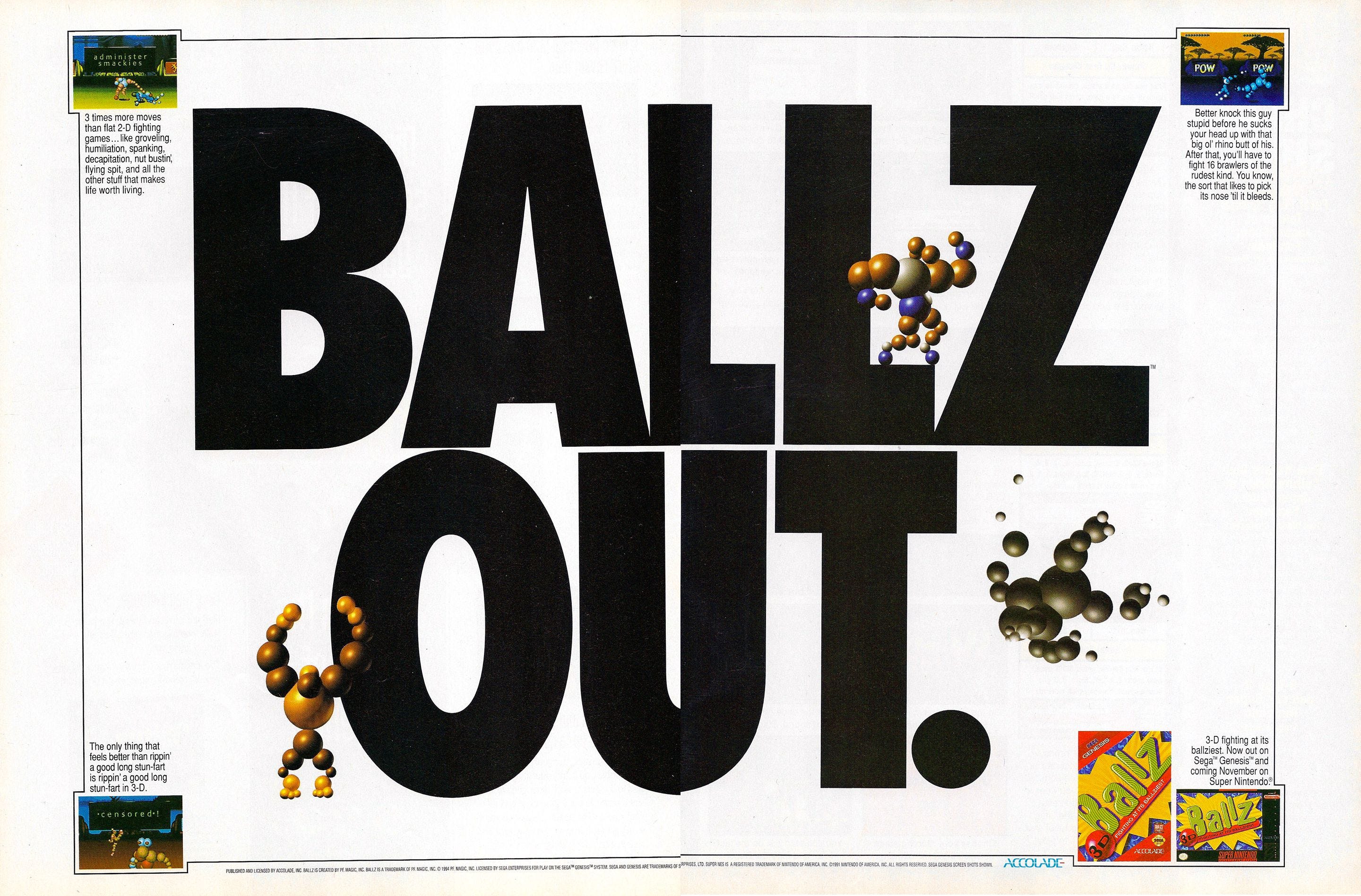
And finally, here are some of the ads that didn’t fit the argument but deserve the attention because they’re awesome.